You’ve probably tried pressing flowers at some point. Maybe it was that perfect rose from your wedding bouquet or those wildflowers your kids picked on a nature walk. You carefully placed them between heavy books, waited weeks with anticipation, and then… disappointment. The colors had faded to brown, the petals looked flat and lifeless, and the whole thing just didn’t capture what made those flowers special in the first place.
You’re not alone in this frustration. Traditional flower preservation methods have some serious limitations, and understanding why they fail can help you make better choices for keeping your floral memories alive.
The Science Behind Why Pressed Flowers Fade
When you press flowers, you’re essentially removing all the moisture while flattening the natural structure. This process breaks down the cellular walls that give flowers their vibrant colors and three-dimensional beauty. Even with perfect technique, pressed flowers will continue to deteriorate over time due to light exposure and natural aging.
The pigments in flower petals are incredibly delicate. Chlorophyll breaks down quickly, turning green leaves brown. Anthocyanins, which create red and purple hues, are particularly unstable when dried. Even if you follow all the traditional rules like using silica gel or changing the paper regularly, you’re fighting a losing battle against chemistry.
Temperature and humidity fluctuations in your home also work against preservation efforts. That pressed flower art hanging on your sunny wall? It’s getting a daily dose of UV rays that accelerate fading. The seasonal changes in your house’s moisture levels cause the dried petals to become brittle and crack.
Why Flat Preservation Misses the Point
Think about what draws you to flowers in the first place. It’s not just their color; it’s the way light plays across the curved petals, how they cast shadows, the delicate way they seem to dance in a breeze. When you flatten a flower, you lose all of that dimensional beauty that made you want to preserve it.
Pressed flowers can look lovely in certain applications, but they’re essentially creating a different type of art altogether. You’re trading the flower’s natural form for a more graphic, two-dimensional representation. For some projects, that works perfectly fine. But when you want to capture the true essence of a bloom, flattening it might not be the answer.
Three-Dimensional Alternatives That Actually Work
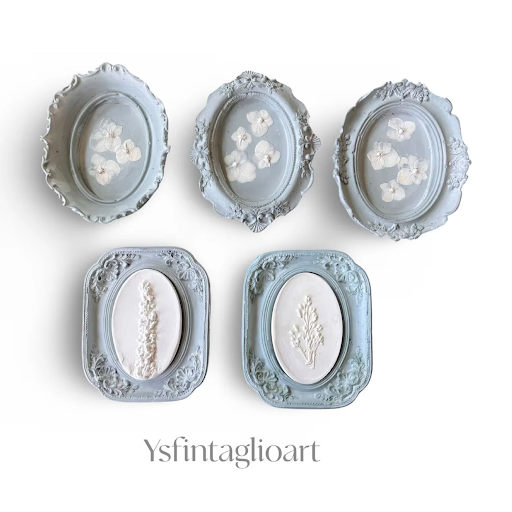
Smart flower lovers are turning to techniques that preserve the natural texture and form of their blooms. Bas relief methods capture every delicate detail by creating impressions in clay, then casting them in plaster. This technique preserves not just the shape but also the intricate patterns of veins, the subtle curves of petals, and even the texture of stems and leaves.
The process works by pressing fresh flowers into moldable clay while they’re at their peak beauty. The clay captures every tiny detail, creating a negative impression that becomes a template. When plaster is poured into this mold, it creates a positive cast that shows all those preserved details in beautiful relief.
This method actually gets better with time rather than worse. While pressed flowers continue to fade and crumble, plaster pieces maintain their detail indefinitely. You can paint them, leave them natural, or even add metallic finishes that highlight the texture.
Getting Professional Results at Home
You can try basic relief techniques yourself with modeling clay and plaster of Paris from craft stores. Choose flowers at their freshest, press them gently but firmly into your clay, and work quickly before they begin to wilt. The key is getting good contact without crushing delicate parts.
Pay attention to the angle and depth of your impression. Different flowers require different approaches. Roses need careful handling around their layered petals, while daisies press more uniformly. Leaves often create the most dramatic results because their vein patterns translate beautifully into relief.
For flowers with deep personal meaning like wedding bouquets or memorial arrangements, you might want professional results. Working with an experienced artist ensures that every detail gets captured properly and that your piece will last for generations.
Your floral memories deserve better than faded pressed flowers tucked away in books. When you want to truly honor the beauty of nature, consider techniques that preserve not just the image, but the dimensional magic that made those blooms special in the first place.Ready to explore three-dimensional floral art that captures nature’s true beauty? Visit Ysfintaglioart to see how handcrafted bas relief techniques can preserve your most treasured blooms.