If you were to ask a stranger right now what kind of music they listen to, there’s a big chance they’ll answer by listing all the genres they like, and if they’re particularly passionate, they might even tell you about what artists are “real” iterations of their favorite genre and which ones are not.
Of course, there’s nothing inherently wrong with that, genres are useful and arise naturally out of our ability to notice certain patterns, so when we notice two bands play in similar styles and dress in similar clothes, we give that a name. The problem is what categories do creativity when they become too rigid.
For example, when Muddy Waters didn’t rise to the legendary status he got by trying to play blues, it was simply his style, the product of his own influences and personal outlook on music manifested in his work leading to something unique.
Then, as he got famous, and that style got the “blues” tag, other people began to play within that style with varying degrees of success, but the uniqueness of it got lost as blues became a market niche.
That said, this article is not about genres being “evil”, only a defence of what you get back when you stop worrying about fitting neatly in one category, with honorable examples to boot.
Genres Are Descriptive, Not Prescriptive
If genres didn’t exist, going to a record store, or browsing for new material on spotify would be an extremely frustrating experience. Instead of just going straight to what you’d want, there would be a sea of other names and albums organized in some other way, like alphabetical, and you’d have to spend hours sifting through irrelevant content to find what you want.
Instead of that, you can go to the “metal” category, and find some things that somewhat align with what you’re looking for. Which is great not only for listeners, but also musicians, who get to find their audience more easily, after all, no one becomes a musician if they don’t want to be listened to.
The problem only starts when the infrastructure of the music industry, including streaming algorithms, playlist curators, radio and so on recognize these categories as market niches that have a lot of financial potential and start to push for it more and more, which tends to leads to more “generic” iterations getting the spotlight.
Once people realize that one genre is getting more attention (and therefore money), formulas start to show up and that music becomes a “generic” version of the phenomenon that originated that genre to begin with.
Retrospectro as a Case Study
New York has always been a place where musical categories break down, partly because the city throws so many influences into close proximity, which makes it prime grounds for looking at what a music scene without genres can look like.
Even now we have bands coming out of Williamsburg, Greenpoint, and Bushwick that are absorbing blues, Americana, folk, punk, and indie rock simultaneously and using that to create unique expressions you’d struggle to find anywhere else.
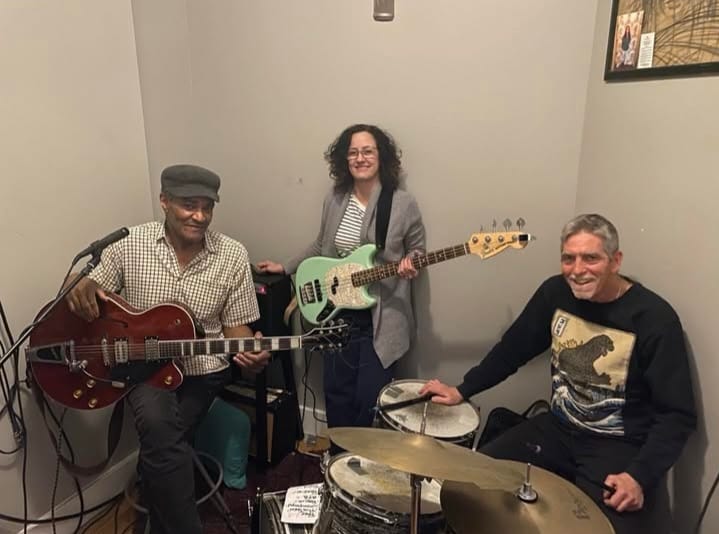
Retrospectro, a Brooklyn-based project built around songwriter Nestor Cora, is a clear example of this potential, pulling from styles like Americana, blues, country, folk, indie, and punk all at once. Their work is not only a good example of transcending genre, but also of what happens when each band member has the space to bring in their own influences .
Nescora’s solo material, for example, has always leaned towards the melodic and roots-oriented style, but now, with a full band, it pushes into rawer, more kinetic territory, making for some truly impressive range.
For a practical example, just look at two of their 2025 singles “For the Money” and “Ordinary Blue”. Each sits at a different end of that spectrum. One clearly has more of a commercial edge that has the potential for reaching wider audiences while the other is quieter and more intimate, the kind of stuff you’d listen to on a sunday night when you want to think, but what both share is specificity, or a sense that the songs were written by someone who was thinking about their own concrete experiences and seeking to express them.
Why This Gets Harder Before It Gets Easier
Unfortunately, streaming platforms have made the genre problem worse. Algorithms are extraordinarily good at giving listeners more of what they already like, but that’s exactly what makes them suck at introducing them to something they didn’t know they needed.
And that tends to harm artists who blend genres and create friction in that system. They’re harder to recommend, harder to playlist, harder to place in the discovery pipeline that now drives most music consumption and actively pushes toward genre coherence.
Today’s musical counterculture is therefore made by artists who resist that pressure by refusing to make their work formulaic and marketable. Those are almost always the artists worth paying the most attention to, which lends them this incredible resilience.
The Honest Answer
There’s no formula for music that lasts. But the artists who make it consistently make decisions based on what the music needs and what they need from their music.
Yet, once again, this is not an attack on genre as an idea. Used well, it gives listeners a starting point. But it was never meant to be the ceiling. The best music has always ignored it when necessary, and the artists willing to do that are the ones keeping the whole thing worth caring about.
Follow Retrospectro at @retrospectro_bkny.