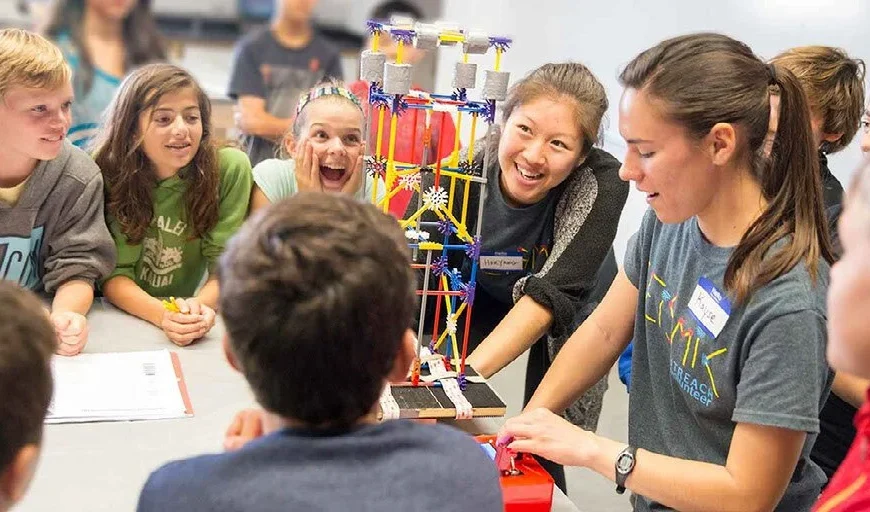
There is a moment every maker knows. The project is finished, it turned out better than expected, and the very first thought is: I want to share this with someone.
That impulse, to share what has been made with hands and patience and a little bit of love, is at the heart of why creative communities exist. It is also, quietly, at the heart of a story making news right now that has something genuinely worth saying to every person who has ever finished a project and wondered what comes next.
The Moment When Sharing Gets Complicated
Making something is one thing. Getting it in front of the right people is another thing entirely.
Anyone who has tried to sell handmade jewelry, share a weaving tutorial, or build even a small creative business online knows exactly how quickly the dream of sharing bumbles into practical obstacles. A proper website costs more than most makers expect. Platforms come with fees, learning curves, and endless decisions. What starts as a joyful creative outlet can suddenly feel like a second job that requires a technology degree.
Most makers do not quit because they stop loving what they make. They quietly put the bigger dream on hold because the barrier between making and being found feels too tall to climb alone.
This is not a small problem. And it turns out it is not unique to the crafting world.
A Story About Schools That Is Really About Something Bigger
America’s Christian Credit Union, a faith-based financial institution headquartered in Glendora, California, recently stepped in as a sponsor of something called The First 10. It is a 2026 initiative run by School Success, and the premise is beautifully simple. Ten private and charter schools will receive professionally designed, enrollment-focused websites at no upfront cost. Applications are open right now at schoolsuccessmakers.com/10schools.
The reason this program exists is worth sitting with for a moment.
School Success has worked with hundreds of schools over the years. The same barrier kept showing up every single time. A modern, well-built website costs $10,000 or more. Most small private and charter schools cannot justify that investment. So the website stays outdated. Families searching for the right school find something that looks tired and move on. The school, full of devoted teachers and strong community, loses those families before a single conversation ever happens.
The school was not failing. The system connecting it to the people it was meant to serve was failing.
Read that one more time. The work was good. The people were dedicated. The mission was real. What was broken was the bridge between all of that and the outside world.
Sound familiar?
What This Means for Every Maker With a Bigger Dream
The Live Love Hobby community is full of incredibly talented people. Weavers who have developed their own patterns. Jewelers whose work stops strangers mid-scroll. Flower pressers whose pieces belong in frames on proper walls. Sewers and knitters and crafters of every kind who make beautiful things and share them with a small circle when they deserve a much wider one.
The barrier is rarely the talent. It is almost never the passion. It is almost always the same thing those schools were running into. The cost, the complexity, and the sheer overwhelm of building a professional presence online without a team to help.
ACCU, which has served Christians, churches, ministries, and Christian schools for over six decades and now holds more than $800 million in assets, did not solve this problem by telling the schools to try harder or figure it out on their own. They found a partner in School Success and funded a structured solution. The schools get real websites, built for results, with ongoing hosting and maintenance managed for them. They can keep doing what they love. The system that connects their work to the world actually works now.
That is the model. Find the barrier. Find the right partner. Remove it together.
The Power of the Right Support at the Right Time
Here is something the crafting community understands instinctively, even if it is not always said out loud. The difference between a hobby that stays on the kitchen table and a creative life that grows into something more is almost never just talent or effort. It is support. It is finding the right person, the right resource, or the right community at the right moment.
A weaving tutorial from someone patient and generous can unlock weeks of stuck progress in a single afternoon. A creative community that celebrates a first attempt the same way it celebrates a polished piece makes a new maker feel like they belong before they have earned their way in. A mentor who explains the business side of selling handmade goods, pricing, platforms, packaging, takes a passion from personal to possible.
The schools in The First 10 program are getting that kind of support. Not a handout. A hand up. A structured solution that removes a real barrier and lets them get back to the work they were already doing well.
Every maker who has ever been stuck at the same kind of wall deserves that same experience.
Small Steps That Close the Gap
For anyone in the Live Love Hobby community who has ever wanted to take their creative work further, a few things are worth remembering from this story.
The barrier is real and it is not a personal failing. The schools were not struggling because they lacked dedication. Most makers who feel stuck between creating and building something bigger are not stuck because of anything missing in them. They are stuck because the path from here to there has genuine obstacles on it. Naming that honestly is the first useful step.
Support is something to seek, not wait for. School Success built a program. ACCU funded it. The schools still had to apply. That act of reaching toward a solution, even when the solution is not yet fully visible, is the move that changes things. For a maker who wants to grow, that might look like joining a creative community, finding a mentor, researching platforms, or simply telling someone else what the dream actually is.
The work being done in private is worth sharing. The schools in this program do excellent work inside their buildings. Their communities know it. The program exists to make sure families outside those communities can find it. The creative work happening at kitchen tables and in craft rooms across this community deserves the same visibility. It is worth finding ways to build that bridge.
A Note for Anyone Connected to a Private School
If anyone reading this is part of a private or Christian school community and that school has been carrying the weight of an outdated website with no budget to fix it, The First 10 initiative is a real and generous opportunity. All ten spots are still available. Each application is reviewed individually, meaning schools tell their story on their own terms. The details and application are at schoolsuccessmakers.com/10schools. More about America’s Christian Credit Union and their work supporting faith-based schools and ministries is at americaschristiancu.com.
The Thing Every Maker Already Knows
Creating is a gift. Sharing what has been created is an act of generosity toward the people who would have loved it but never found it.
The schools in The First 10 program are about to become findable in a way they were not before. Families who were looking for exactly what those schools offer will now be able to find them. That connection, made possible because one institution saw a barrier and another funded its removal, is going to matter to real children and real families in ways that cannot be fully counted.
The same thing happens every time a maker finds a way through the barrier between their work and the world that would love it.
That next step is always worth taking. And no one has to figure it out entirely alone.