
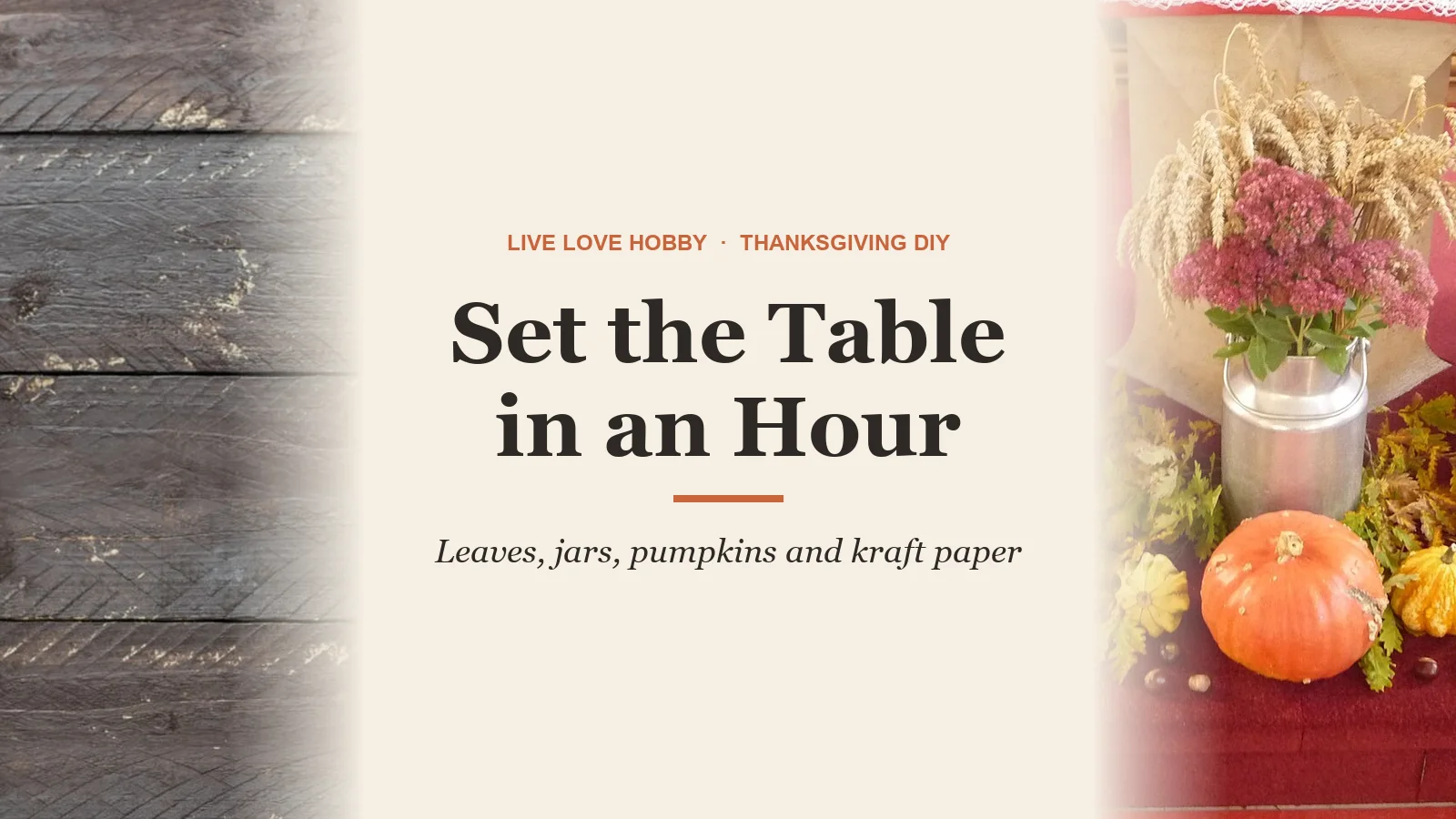
Picture a host at 9 p.m. on the Wednesday before Thanksgiving. The pies are cooling on the counter, the turkey is thawing in the fridge, and the dining table is completely bare.
There’s no time for a store run and no budget left for flowers. There is a yard full of fallen leaves, a few mini pumpkins from the farmers market, and a roll of brown paper in the closet.
That’s enough for a table people will remember.
Quick answer
The quickest DIY Thanksgiving centerpieces use what you already have: a low row of mini pumpkins, pinecones and battery candles down a kraft paper runner, or a glass jar of foraged branches. For place cards, write names on pressed leaves, tags tied to mini pumpkins, or folded kraft cards. Most take about an hour.
Key takeaways
- Thanksgiving 2026 falls on Thursday, Nov. 26, three weeks from this post.
- Glycerin-preserved leaves take two to three weeks, so start them now if you want them.
- Air-dry clay place card holders need about 72 hours to dry fully.
- Keep centerpieces low so guests can see each other across the table.
- Use battery candles near dried leaves, paper and pinecones.
When is Thanksgiving 2026, and how much time do you need?
Thanksgiving Day falls on Thursday, Nov. 26, 2026, according to the federal holiday schedule. That gives you three weeks from today.
Most of the projects below take about an hour of hands-on time, and several can be made the night before. Two need a head start: leaves preserved in glycerin take a couple of weeks, and air-dry clay needs a few days to dry. We’ve flagged both so you can plan.
The goal isn’t a magazine table. It’s a table that feels warm, leaves room for serving dishes, and shows guests you thought about them.
What are the easiest DIY Thanksgiving centerpieces?
A good Thanksgiving centerpiece follows three rules. Keep it low, so people can see and talk across the table. Keep it narrow, so there’s room for the food. And keep it safe around open flames.
1. Mini pumpkin and pinecone runner (about 30 minutes)
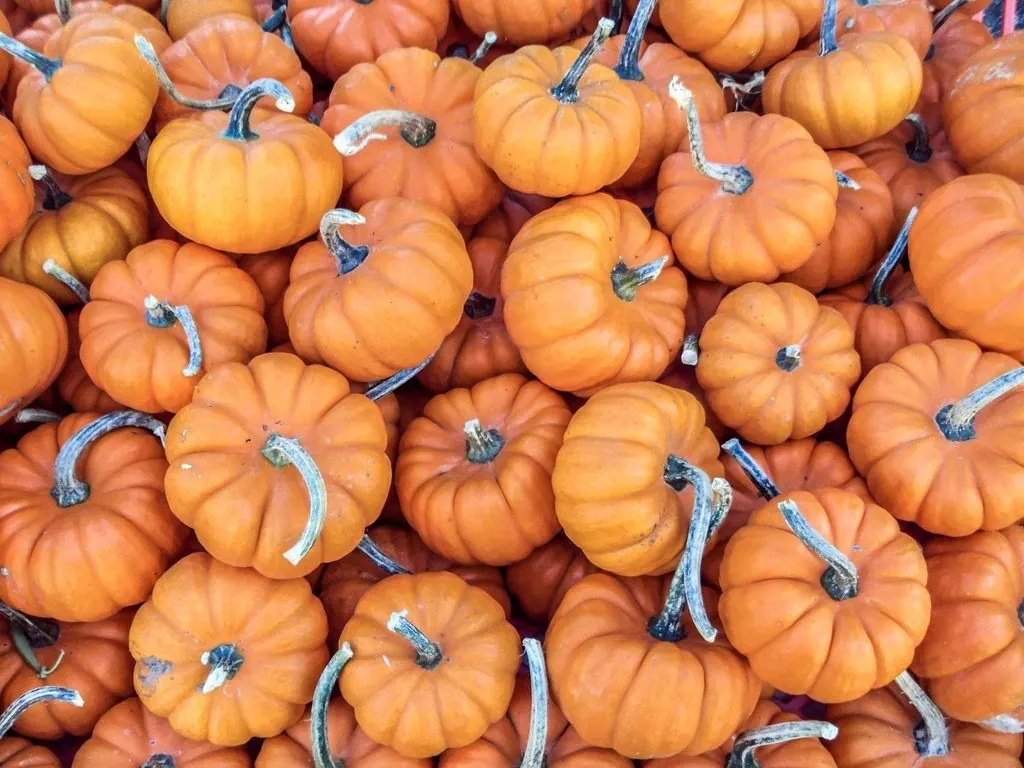
Lay a strip of kraft paper or a linen runner down the center of the table. Arrange mini pumpkins, small gourds and pinecones in a loose, uneven line, clustering them in groups of three. Tuck fallen leaves and a few sprigs of rosemary or other herbs in between.
Finish with battery-operated tea lights in small glass holders. Real flames and dried leaves don’t mix, and flameless candles let you leave the runner alone during dinner.
2. Foraged branches in a glass jar (about 20 minutes)
Clip a few branches with colorful leaves or berries from your own yard, or ask a neighbor first. Trim the stems at an angle and place them in a clear jar or vase filled with water.
Since a tall arrangement blocks the view, use it on a sideboard or buffet, or group three short jars down the table instead. Wrap the jar necks with twine for a simple finish.
3. A gratitude runner guests write on (about 15 minutes)
Roll out kraft paper as your tablecloth or runner. Write a prompt at each place setting, like “This year I’m thankful for…” and set out a cup of markers or crayons.
Guests fill it in between courses. Kids especially love it, and afterward you can cut out the best notes and save them. It may be the cheapest centerpiece on the list and the one people talk about most.
4. An edible harvest bowl (about 15 minutes)
Fill a wooden bowl or basket with apples, pears, clementines and nuts in their shells. Add a few leaves around the edge. It looks abundant, costs little extra if you already planned to buy the fruit, and gets eaten later in the week.
If you have a woven basket you love, now’s its moment. Our guide to popular basket weaving patterns is a fun read if you’ve ever wanted to make your own.
5. Hollowed pumpkin vase (about 45 minutes)
Cut the top off a medium pumpkin, scoop it out, and set a jar of water inside. Fill the jar with grocery-store flowers, herbs or foraged stems. The jar keeps the flowers watered and stops the pumpkin from going soft as quickly.
How do you make DIY Thanksgiving place cards?
Place cards solve a real problem at bigger gatherings: they tell everyone where to sit, and they let you seat chatty cousins apart or shy guests next to a friendly face. These options each take about an hour for a table of a dozen.
Pressed leaf place cards
Write each guest’s name on a flat, dry leaf with a metallic paint marker, and lay it across the plate or napkin. Large maple or oak leaves work best.
Leaves straight from the yard curl as they dry, so press them first. The Clemson Cooperative Extension’s guide to drying flowers and foliage suggests placing plant material between the pages of a book, then closing and weighting it. Start a few days ahead so they flatten. If your past pressing projects lost their color, our post on why pressed flowers fade explains what goes wrong.
Mini pumpkin name tags
Cut small tags from kraft paper or cardstock, write names, and tie them to mini pumpkin stems with twine. Each pumpkin doubles as a take-home favor.
Pinecone holders
Slide a folded name card into the scales at the top of a pinecone. If the pinecone tips, trim the bottom flat or set it on a bottle cap.
Folded kraft tent cards
Fold a rectangle of cardstock in half, write the name on one side, and decorate with a leaf stamp, a sprig of rosemary tied on with string, or a quick hand-drawn acorn.
Try this weekend: leaf place cards
- Collect a dozen large, flat leaves on a dry day.
- Press them between the pages of a heavy book for a few days.
- Write each guest’s name with a gold or white paint marker.
- Store them flat between parchment paper until Thanksgiving.
Time: about 20 minutes, plus pressing time. Cost: a paint marker if you don’t already have one.
More project ideas
Which projects should you start early?
Two projects reward a little planning, and today is a good day to begin.
Glycerin-preserved leaves (start now)
Leaves preserved in glycerin stay soft and flexible instead of turning brittle, which makes them lovely for runners and place cards. Clemson’s extension guide recommends a mixture of 1 part glycerin to 2 parts water by volume, kept warm, and notes the process takes about two to three weeks. The leaves are done when the whole leaf has turned golden brown.
Started this weekend, a batch should be ready by Thanksgiving week. Glycerin is often sold at pharmacies and craft stores.
Air-dry clay place card holders (start by the weekend before)
Roll air-dry clay flat, press a real leaf into it to leave a print, and cut around the shape. Before it dries, cut a narrow slit along the top edge to hold a name card.
Give it time. Crayola notes its air-dry clay is completely dry after 72 hours, and that sealing does not make pieces waterproof. Make these by the weekend before Thanksgiving, keep them away from drinks and food, and treat them as decorations rather than dishware.
How do you keep a homemade centerpiece safe?
Dried leaves, pinecones, kraft paper and twine are all things that burn easily. A few simple habits keep the table relaxed:
- Choose flameless candles for anything near dried materials or paper runners.
- If you use real candles, keep them on a separate tray away from leaves and paper, and never leave them burning in an empty room.
- Check for pests. Shake out pinecones and branches outdoors, and inspect anything brought in from the yard.
- Think about guests. Keep berries and plants out of reach of small children and pets if you aren’t sure what they are, and ask guests about allergies before using fresh flowers.
If you love the glow of real candles, our easy candle making guide is a good winter project. Just keep homemade candles on a separate, clear surface on Thanksgiving Day.
How do you set a kids’ table that keeps everyone busy?
If children are coming, give them a table that doubles as an activity. A kraft paper cover with a cup of crayons in the middle keeps small hands occupied between courses, and the gratitude prompts from the runner idea work just as well here.
Let kids make their own place cards on Wednesday afternoon. Hand them tags, stickers and markers, and they’ll be invested in finding their seats the next day. Skip glass jars and candles on a kids’ table entirely, and use sturdy pumpkins and pinecones that can survive being picked up.
A small basket of leaves and a few blank cards gives early finishers something to do while the grown-ups linger over pie.
What do you do with the decorations after Thanksgiving?
Most of a natural centerpiece has a second life. Uncarved mini pumpkins and gourds often stay on display well into December if they’re kept cool and dry, so move them to a windowsill or front step after the holiday.
Glycerin-preserved leaves can be stored flat in a box for next year. Save the best gratitude notes from the paper runner in an envelope, and date it. In a few years, reading them back may become its own tradition.
Anything that has started to soften can go into the compost or yard waste, depending on what your area accepts.
What’s a simple three-week plan for a handmade table?
| When | What to do |
|---|---|
| This weekend (Nov. 7 to 8) | Gather leaves. Start a glycerin batch. Press flat leaves in heavy books. |
| Weekend before (Nov. 21 to 22) | Make air-dry clay holders. Buy mini pumpkins, pinecones and kraft paper. |
| Tuesday, Nov. 24 | Write place cards. Cut tags. Count chairs and plan seating. |
| Wednesday, Nov. 25 | Lay the runner and build the centerpiece. Set out battery candles. |
| Thursday, Nov. 26 | Add fresh herbs or flowers in the morning. Set place cards. Enjoy. |
A handmade table doesn’t have to be perfect. Uneven pumpkins and slightly curled leaves look more like autumn than anything from a store. What guests notice is that their name is waiting for them.
Back to that host at 9 p.m. on Wednesday. Forty minutes later, there’s a strip of brown paper down the table, a row of mini pumpkins and pinecones glowing under battery candles, and a leaf with a name on it at every plate. The pies are still cooling. The table is ready.
Share your project
Did your yard, pantry or recycling bin become a centerpiece this year? Send us a photo of your Thanksgiving table, the place cards, or the last-minute runner that came together the night before. We’d love to see it.
Frequently asked questions
How tall should a Thanksgiving centerpiece be?
Keep it low enough that seated guests can see and talk over it. Many hosts keep table arrangements below eye level and place taller arrangements on a sideboard or buffet instead.
How do you keep fall leaves from crumbling?
Pressing leaves flat between book pages helps them hold their shape. For soft, flexible leaves, the Clemson Cooperative Extension describes soaking them in a warm mix of 1 part glycerin to 2 parts water for about two to three weeks.
What can I use instead of place cards?
Write names on mini pumpkins with a paint marker, tie tags to napkins, or write directly on a kraft paper tablecloth at each seat. Any of these tell guests where to sit and double as decoration.
Can I use real candles in a Thanksgiving centerpiece?
It's safer to use flameless candles near dried leaves, pinecones and paper. If you use real candles, keep them on a separate surface away from flammable decor and never leave them burning unattended.
How far ahead can I make a Thanksgiving centerpiece?
Pumpkins, gourds, pinecones and pressed leaves can be arranged several days ahead. Add fresh flowers, herbs or cut branches the day before or the morning of so they look their best.
Sources
- U.S. Office of Personnel Management: Federal Holidays
- Clemson Cooperative Extension Home & Garden Information Center: Drying Flowers
- Crayola: Can Air-Dry Clay pieces be sealed?
Read us often? Make Live Love Hobby a preferred source in Google Search and see our reporting more often in Top Stories.
